
Track: Orthopedic Infections
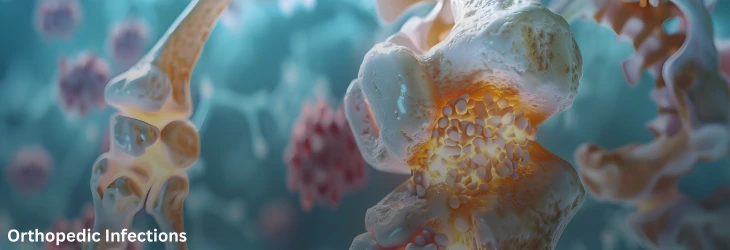
The Orthopedic Infections session tackles one of the field's most feared complications head-on. Attendees will examine current best practices for diagnosing and staging periprosthetic joint infection, along with strategies for managing osteomyelitis in both adult and pediatric patients.
The session also compares one-stage and two-stage revision strategies, explores antibiotic stewardship and local delivery systems, and dives into the emerging science of biofilm-resistant implants, equipping attendees with practical, evidence-based tools for prevention in the operating room.
As antibiotic resistance and revision surgery volumes both continue to grow, this session offers critical, up-to-date guidance for reducing infection risk and improving outcomes, a must-attend for any surgical team managing complex or high-risk orthopedic cases.
Key Topics and Highlights:
Periprosthetic Joint Infection: Diagnostic criteria and staging for accurate, timely identification. Diagnosis often relies on a combination of laboratory markers, joint aspiration, and clinical criteria.
Osteomyelitis Management: Treatment strategies across adult and pediatric populations. Treatment duration and surgical debridement strategy vary significantly based on infection chronicity and location.
One-Stage vs. Two-Stage Revision: Comparing outcomes to guide surgical decision-making. This session presents comparative outcome data from both approaches.
Antibiotic Stewardship: Optimizing systemic and local antibiotic delivery. Local antibiotic delivery systems are increasingly used alongside systemic therapy to improve local tissue concentrations.
Biofilm Science: Understanding bacterial biofilms and infection-resistant implant design. Biofilms significantly complicate infection eradication by protecting bacteria from both antibiotics and the immune system.
Infection Prevention Protocols: Operating room practices that reduce infection risk. Simple, consistently applied protocols often have a greater impact than any single advanced technology.
Scientific Highlights
- Orthopedic Surgery
- AI and Robotics in Orthopedics
- Orthopedic Radiology
- Trauma Reconstruction and Fracture Management
- Complex Arthroplasty and Arthroscopy
- Joint Preservation and Replacement
- Spine Disorders, Deformity and Functional Surgery
- Hand and Upper Extremity Surgery
- Advanced Foot and Ankle Surgery
- Pediatric Orthopedics
- Sports Medicine in Orthopedics
- Orthopedic Oncology
- Orthopedic Infections
- Rheumatology and Arthritis
- Metabolic Bone Diseases and Osteoporosis
- Orthopedic Physiotherapy
- Physical Medicine and Rehabilitation
- Musculoskeletal Disorders: Clinical Trials

Organization Location
1309 Coffeen Avenue, STE 1200, Sheridan, Wyoming 82801, USA
Mail us at
General Enquiry
contact@scientexconferences.com
Call us at
USA : (+1) 312 815 4231
Quick Links
Past Conferences
No past conferences available.
Past Webinar
No past webinars available.