

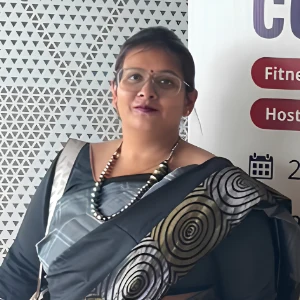
Speaker
Tanvi Agarwal
- Santosh Deemed to be university
- India
Presentation
Rethinking the Physiotherapy Assessment Performa: Integrating Abo Blood Group, Pain Perception and Biopsychosocial Factors Towards Rehabilitation
- April 15-16, 2027
- Dubai, UAE
Biography
Tanvi is presently working as Vice Principal at Santosh College of Physiotherapy, Santosh Deemed to be University, Ghaziabad. Experienced and dedicated healthcare academic leader with over 13 years in physiotherapy education, research, and administration. Committed to advancing allied health programs that meet industry standards and improve community healthcare outcomes. She serves as a reviewer for several international journals and books and has presented her research at numerous global conferences.
Abstract
Background: Musculoskeletal pain is a major contributor to disability and is routinely assessed in physiotherapy using pain intensity, physical impairments, functional limitations and psychosocial factors. Contemporary musculoskeletal physiotherapy increasingly emphasizes a biopsychosocial and individualized approach to assessment and management. However, biological variability in pain perception remains an area requiring further exploration. Emerging evidence suggests a possible association between ABO blood group and experimentally measured pain responses, although the evidence remains limited and should not yet be interpreted as establishing a clinical determinant of pain.
Objective: To explore the potential role of ABO blood group as an additional biological variable within the physiotherapy assessment proforma, particularly in relation to pain perception and individualized musculoskeletal rehabilitation.
Methodology: The proposed assessment framework integrates ABO blood group with conventional physiotherapy assessment domains, including demographic characteristics, pain intensity and characteristics, pressure pain threshold/pain tolerance, musculoskeletal impairments, functional status and relevant psychosocial factors. Previous experimental research involving healthy young adults has demonstrated measurable differences in pressure pain responses across ABO blood groups, supporting the need for further investigation of this variable in physiotherapy and pain research. The proposed framework considers ABO blood group as a research and profiling variable rather than a diagnostic or treatment-determining factor.
Results/Expected Outcome: Incorporating ABO blood group into the assessment proforma may facilitate systematic collection of biological data alongside established biopsychosocial variables. This may generate new research opportunities to investigate relationships between blood group, pain sensitivity, functional limitations and clinical outcomes across musculoskeletal conditions. The framework may also contribute to developing more comprehensive patient profiles for future personalized rehabilitation research.
Conclusion: The integration of ABO blood group into physiotherapy assessment represents an innovative research direction at the intersection of biological variability, pain science and musculoskeletal rehabilitation. Further adequately powered clinical studies are required to determine whether ABO blood group provides meaningful incremental information beyond established pain and biopsychosocial assessment measures
